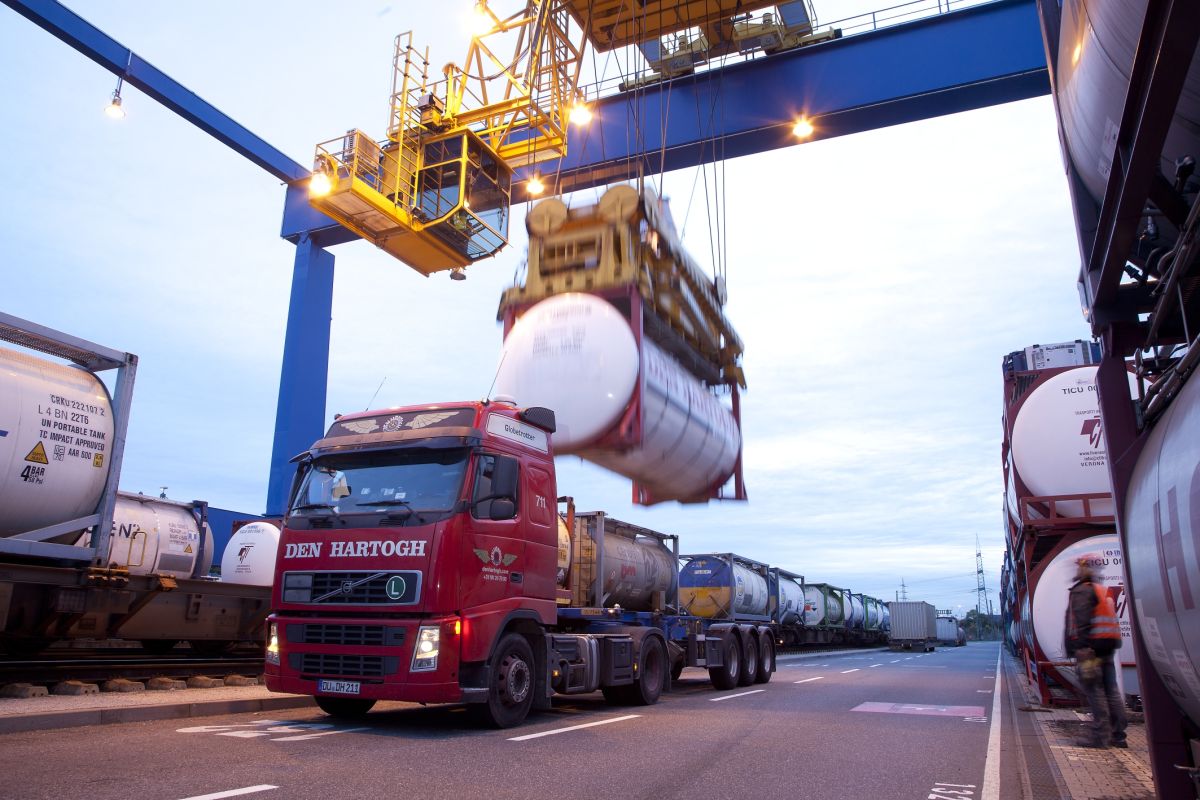
After three years of intensive research and development, Germany’s KIBA project – short for Künstliche Intelligenz und diskrete Beladeoptimierung – has successfully concluded. Led by Kombiverkehr KG with partners including DUSS, INFORM, VTG, Goethe University Frankfurt, TU Darmstadt, and KombiConsult, the project created a demonstrator for AI-driven train-loading and network-capacity optimisation in intermodal rail freight. It was funded by the Federal Ministry for Digital and State Modernisation.
"The KIBA project shows how artificial intelligence can make rail freight more efficient," said Heiko Krebs, Managing Director of Kombiverkehr. "The developed prototypes help to use train capacity better, deploy resources efficiently, and make combined transport more attractive – an important step toward shifting freight from road to rail and protecting the climate."
Using a central data platform, researchers designed algorithms for load planning and network optimisation, with results visualised through a web-based interface. The system combines AI-based demand forecasting with mathematical optimisation to ensure full train utilisation while reducing crane movements and transshipments.
"The integration of AI and optimisation opens up new possibilities for combined transport," explained Dr Rafael Velásquez, Director Optimisation & Integration at INFORM. "Forecasts can be directly fed into optimisation models so that trains are loaded efficiently and networks managed more reliably."
According to Eva Savelsberg, Senior Vice President at INFORM, the success of KIBA lies in cooperation: "Only through the close collaboration between industry and academia could such an innovative result be achieved. Building this bridge is essential if we are to stay competitive in AI innovation."
With the project’s completion, the partners have laid the foundation for real-world implementation. The next steps include data quality assurance, automated information exchange, and live tests with operational systems. The developed prototype is now being prepared for use by terminal operators and intermodal freight operators.