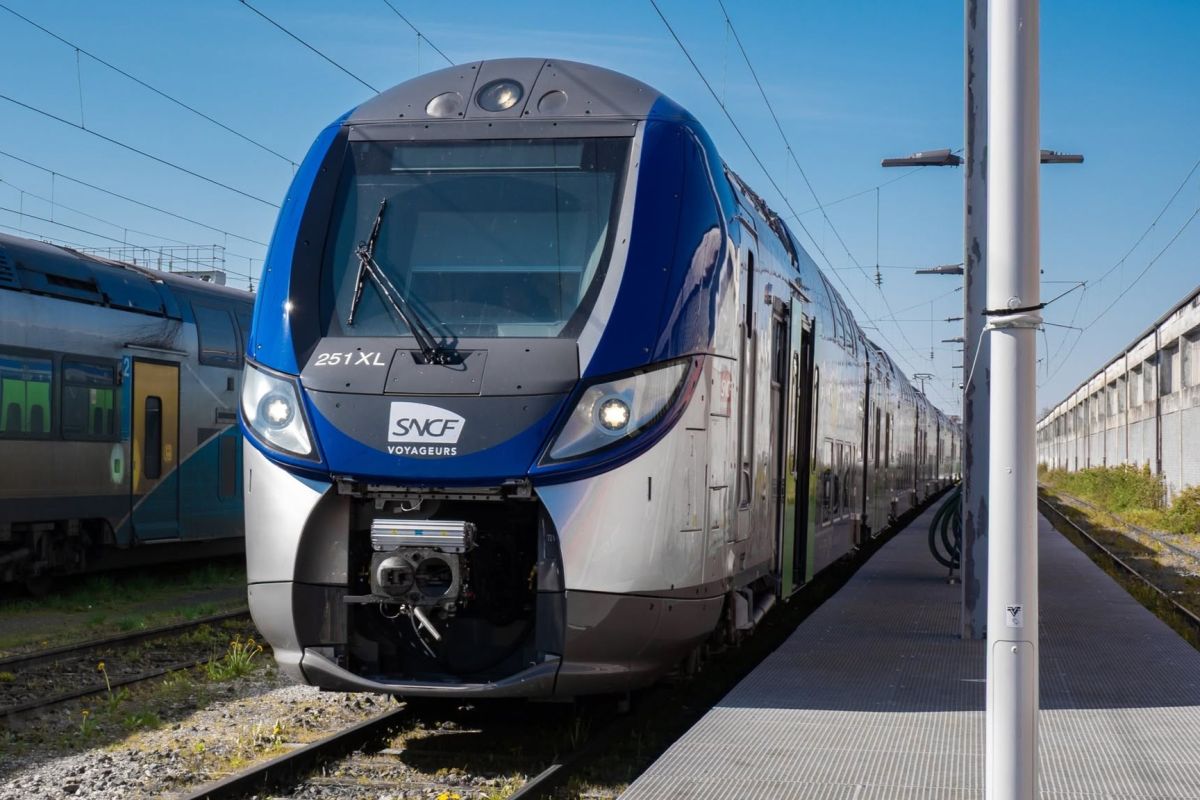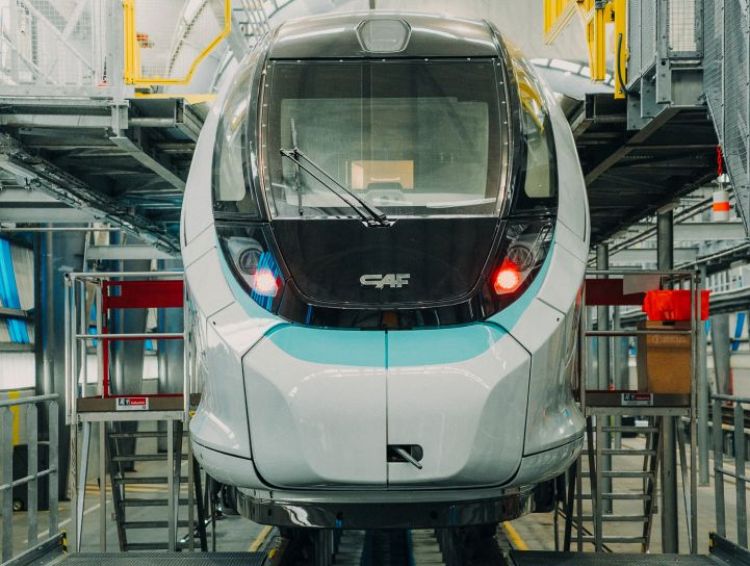
The first unit of the new “Oxygène” long-distance train developed by CAF has been presented at the Villeneuve maintenance centre. Production is underway at CAF’s Reichshoffen facility in eastern France.
Deployment schedule and investment structure
The Oxygène fleet will be introduced gradually starting in 2027. A total of 50 trains have been ordered under two separate contracts: 28 units allocated to the Paris–Clermont-Ferrand and Paris–Limoges–Toulouse routes, and 22 units to the Bordeaux–Marseille line. The total rolling stock investment amounts to EUR 1.47 billion, financed by the French State. This includes:
- EUR 715 million for the 28 trains on central axis routes
- EUR 650 million for the 22 trains on the southern corridor and associated maintenance facilities
- EUR 100 million allocated to additional maintenance installations in Île-de-France and the regions of Clermont-Ferrand and Brive-La-Gaillarde
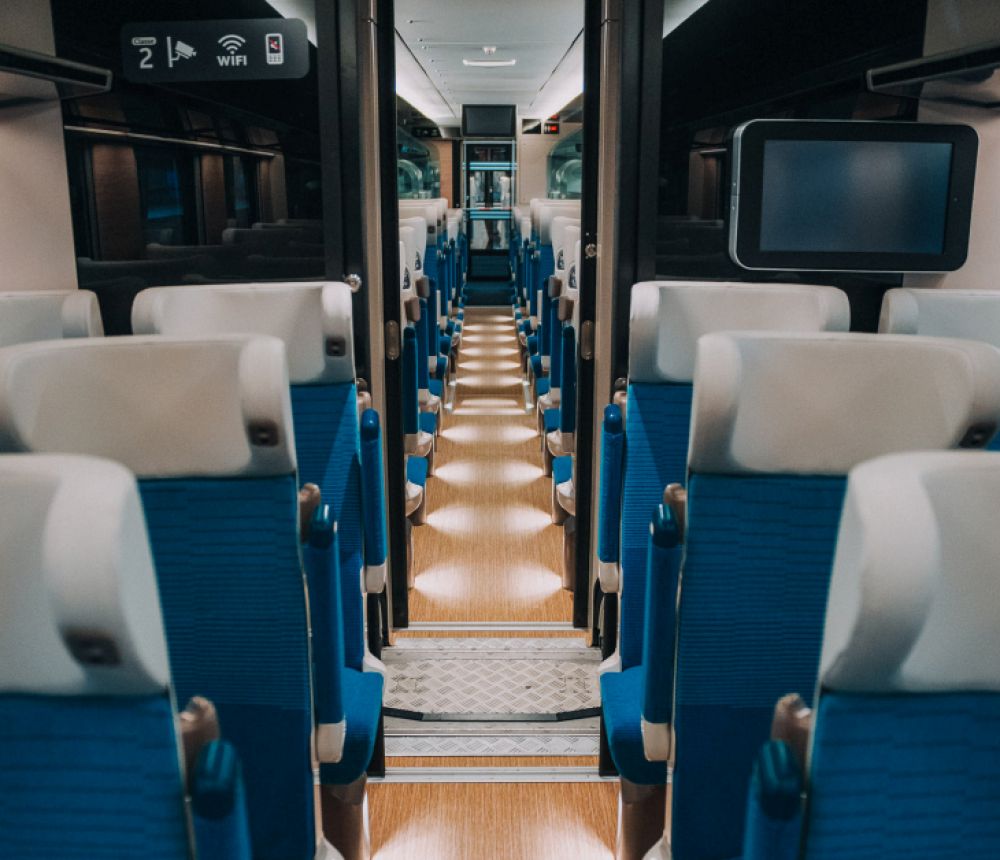
CAF will deliver the vehicles progressively through 2028 and 2029. Each trainset will have 420 seats (317 in second class, 103 in first), with doubled formations accommodating up to 840 passengers.
Infrastructure upgrades in parallel
The launch of the Oxygène trains is accompanied by substantial infrastructure regeneration across the affected routes. SNCF Réseau and the State are jointly investing approximately EUR 2.36 billion for line upgrades. This includes:
- EUR 1.6 billion on the Paris–Limoges–Toulouse route
- EUR 760 million on the Paris–Clermont-Ferrand corridor
Additional modernisation work—EUR 385 million for the Paris–Limoges–Toulouse axis and EUR 130 million for Paris–Clermont-Ferrand—is targeting increased speeds and improved compatibility with the new rolling stock. Reinforcement of traction infrastructure between Melun and Moret adds another EUR 26 million to the budget.
Technical features and accessibility
The Oxygène trains introduce several onboard systems and design updates. Key features include:
- Access for wheelchair users in both first and second class
- Ergonomic seating, individual reading lights, USB and power outlets throughout
- Real-time passenger information displays and onboard video surveillance
- Dedicated space for bicycles and a logistics area for catering
- On-screen driver’s cab view transmission
- Seat reservation display at every seat
Testing will continue through mid-2026. Two units will begin type approval tests in the second half of 2025 on the French national rail network. Trials will include homologation runs and operational simulations on the Paris–Clermont-Ferrand and Paris–Limoges–Toulouse routes. Authorization for commercial service is expected by the end of 2026, with entry into service planned for the first quarter of 2027