In 2024, the Hungarian single wagonload segment handled 4.95 million tonnes of goods and reached more than 1,133 million tonne-kilometres. Compared to the previous year, this represents an increase of over 500,000 tonnes and 160 million tonne-kilometres.
The total subsidy request exceeded approximately EUR 18 million. The initially secured budget of around EUR 16.4 million was fully utilised during the year. By year-end, the additional funding need reached approximately EUR 1.95 million. Three more railway companies joined the single wagonload support program during the year, increasing the number of market participants.
Outlook for 2025
Preliminary data for 2025 from Hungarian railway association HUNGRAIL suggest further growth compared to the 2024 values over the same period. Currently, eleven companies are actively participating in the single wagonload support program. Based on previous experience, funding is expected to run out before the end of the year. The continuation of state support and flexible adjustment of available resources aligned with actual transport performance remain under discussion.
The program contributes to shifting freight volumes from road to rail, which supports rail's position in Hungary's logistics system.
Environmental impact of the program
In 2024, nearly 5 million tonnes of goods were transported by rail instead of road under the program. This shift corresponds to approximately 340,000 fewer truck movements on Hungarian roads. The estimated reduction in carbon dioxide emissions was 80,000 tonnes. Neutralising this amount of CO₂ would require the absorption capacity of approximately 1.17 million trees, according to HUNGRAIL.
Industrial sidings under review
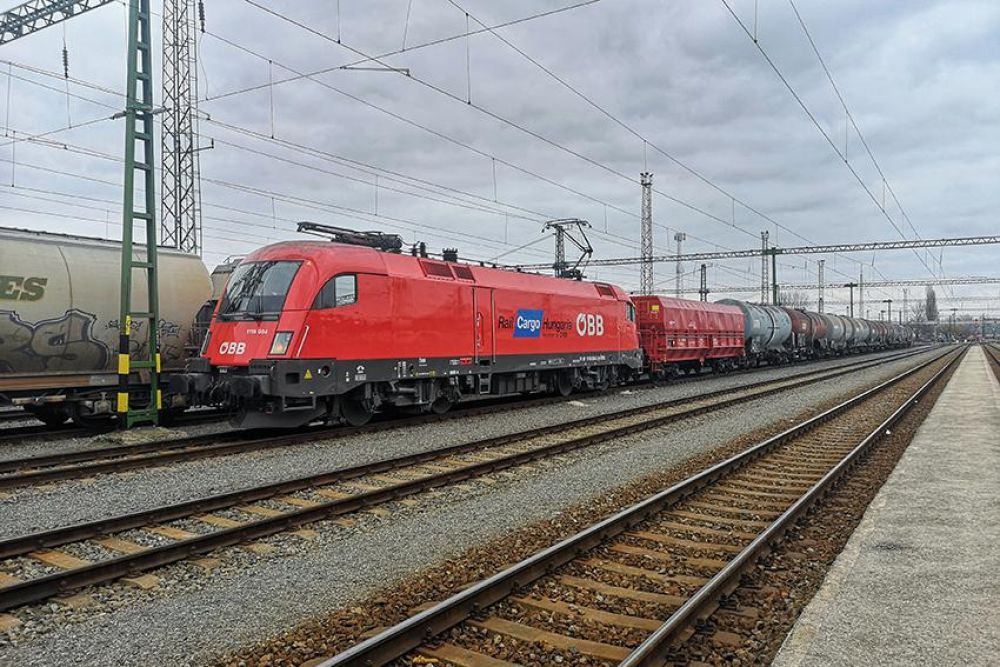
The June Railway Academy Forum focused on the potential of more efficient use of industrial sidings. MÁV Pályaműködtetési reported that it manages nearly 950 industrial sidings, with utilisation rates currently below 50%. The company is preparing a new concept for industrial siding management, which includes the development of a comprehensive strategy with user involvement. Key steps involve reviewing existing contracts, updating procedures, and adjusting the owner-user system to ensure flexibility and transparency, with clear cost structures.
Future plans also include aligning usage-based fees with industrial activity levels.
International comparisons
Within the Rail4Regions project, international benchmarks were presented, showing that similar structures for industrial siding usage exist in countries like Slovenia, the Czech Republic, and Slovakia. Support schemes in some countries include coverage of up to 50% of investment costs for sidings in the Czech Republic and Slovakia, and in Italy, full reimbursement is available for electrification of sidings. These examples were highlighted for further consideration when exploring sustainable solutions for rail freight traffic growth.
Feedback from industrial users
Over the past year, HUNGRAIL collected feedback from nearly one hundred industrial siding users. Key issues were identified, and based on this input, further action plans are being prepared.
The working group emphasised the need for realistic and competitive regulations for the effective use of industrial sidings. Cooperation from legislative, regulatory, user, and ownership stakeholders is seen as necessary to develop a comprehensive set of proposals. HUNGRAIL continues to work on providing a platform for collaboration and is open to contributions from all parties with an interest in industrial siding operations.